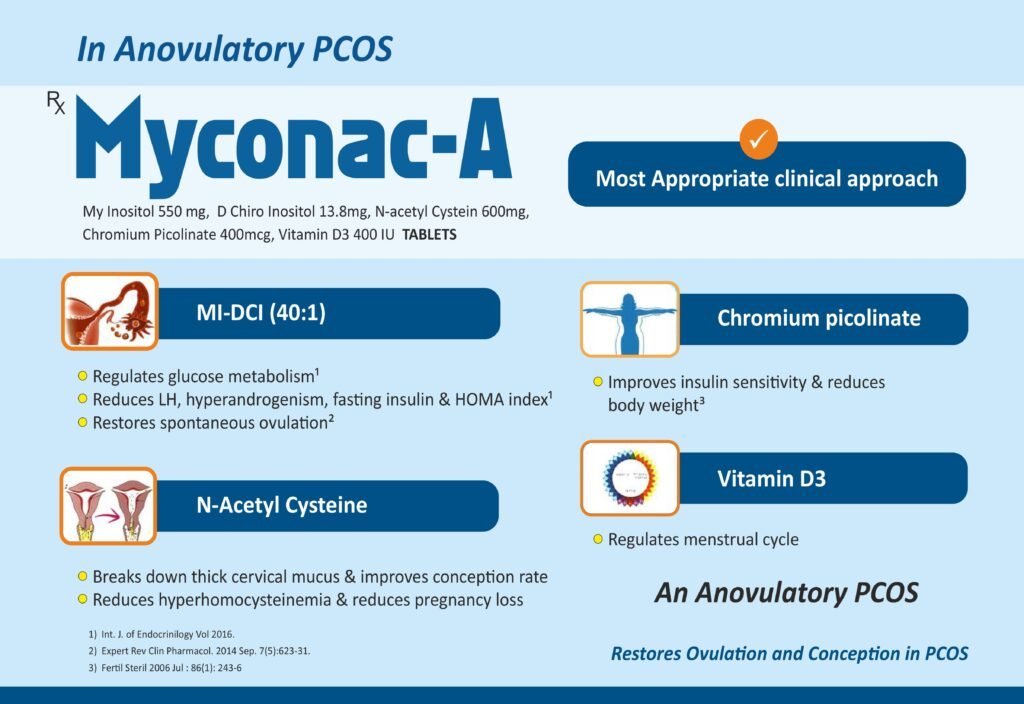
Benefits of Myconac-A
The key benefits of intaking Myconac-A tablet are as follows:Restores normal menstruation
Reduces symptoms associated with PCOS: alopecia. hirsutism(facial hair) etc.
Helps in achieving pregnancy
Reduces the risk of infertility
Helps address Vitamin D deficiency
Enable faster weightloss
Helps clear up bile duct blockage in infants
Ease chest pain
Treating Alzheimer’s disease
Myconac-A is a safe and effective therapy for PCOS. It is best to be used under medical supervision.
Myconac-A
Myconac-A
Prescription for: Personal Health
Myconac-A contains D-chiro Inositol, Myo-inositol, N-Acetylcysteine, and Vitamin D3 as main active ingredients.
Myconac-A use
It is an ideal supplement for women suffering from Poly-Cystic Ovarian Syndrome (PCOS). PCOS generally occurs due to hormonal imbalance and insulin resistance. Vitamin D3 in Chirocyst has an efficient role in improving insulin resistance. Whereas. L-Methyl folate (an active form of folic acid) and Myo-Inositol corrects the hormonal balance. Improving overall ovarian function and ovulation is the main Chirocyst tablet use. Other than PCOS Myconac-A use is beneficial in bile duct blockage in infants, Alzheimer’s disease, Vitamin D deficiency, and sometimes enables weight loss as well.
Myconac-A
Prescription for: Personal Health
Myconac-A contains D-chiro Inositol, Myo-inositol, N-Acetylcysteine, and Vitamin D3 as main active ingredients.
Myconac-A use
It is an ideal supplement for women suffering from Poly-Cystic Ovarian Syndrome (PCOS). PCOS generally occurs due to hormonal imbalance and insulin resistance. Vitamin D3 in Chirocyst has an efficient role in improving insulin resistance. Whereas. L-Methyl folate (an active form of folic acid) and Myo-Inositol corrects the hormonal balance. Improving overall ovarian function and ovulation is the main Chirocyst tablet use. Other than PCOS Myconac-A use is beneficial in bile duct blockage in infants, Alzheimer’s disease, Vitamin D deficiency, and sometimes enables weight loss as well.

PCOS
Polycystic ovary syndrome (PCOS) is a problem with hormones that happens during the reproductive years. If you have PCOS, you may not have periods very often. Or you may have periods that last many days. You may also have too much of a hormone called androgen in your body.
With PCOS, many small sacs of fluid develop along the outer edge of the ovary. These are called cysts. The small fluid-filled cysts contain immature eggs. These are called follicles. The follicles fail to regularly release eggs.
The exact cause of PCOS is unknown. Early diagnosis and treatment along with weight loss may lower the risk of long-term complications such as type 2 diabetes and heart disease.
Symptoms
Symptoms of PCOS often start around the time of the first menstrual period. Sometimes symptoms develop later after you have had periods for a while.The symptoms of PCOS vary. A diagnosis of PCOS is made when you have at least two of these:Irregular periods. Having few menstrual periods or having periods that aren’t regular are common signs of PCOS. So is having periods that last for many days or longer than is typical for a period. For example, you might have fewer than nine periods a year. And those periods may occur more than 35 days apart. You may have trouble getting pregnant.
Too much androgen. High levels of the hormone androgen may result in excess facial and body hair. This is called hirsutism. Sometimes, severe acne and male-pattern baldness can happen, too.
Polycystic ovaries. Your ovaries might be bigger. Many follicles containing immature eggs may develop around the edge of the ovary. The ovaries might not work the way they should.
PCOS signs and symptoms are typically more severe in people with obesity.